Physiotherapy
Physiotherapy is an integral part of comprehensive rehabilitation and focuses on the diagnosis, treatment and prevention of musculoskeletal disorders.
It is carried out on a physician’s prescription by a physiotherapist, who applies specialised techniques – primarily therapeutic exercises and targeted manual therapies – individually tailored to the patient’s needs.
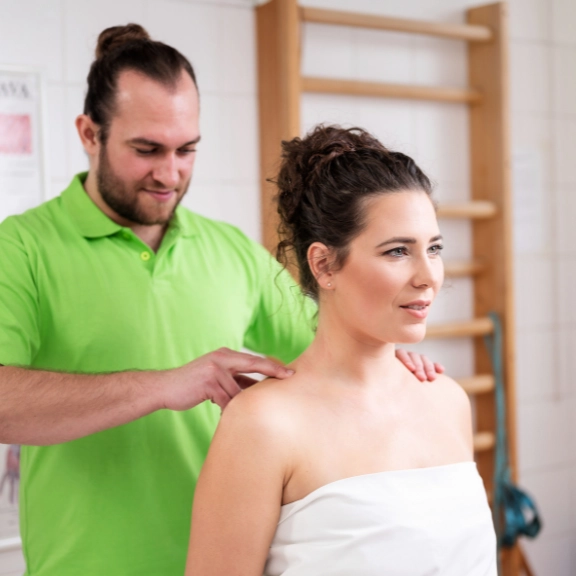
Soft Tissue Therapy Techniques
Performed on a physician’s prescription
 Particularly suitable for:
- Pain and restricted mobility – releases tension in muscles, fascia and subcutaneous tissue, improves tissue elasticity and prepares the body for further therapies
- Scar treatment – helps eliminate negative effects of scars on the musculoskeletal system
- Prevention of musculoskeletal dysfunction – helps prevent blockages and overload
TIP: Even scars that are many years old or appear insignificant may remain active and cause dysfunction in the musculoskeletal system.
- A manual therapy technique in which the physiotherapist releases soft tissues – skin, subcutaneous tissue, muscles and fascia – without the use of instruments. The technique also includes special methods for scar treatment.
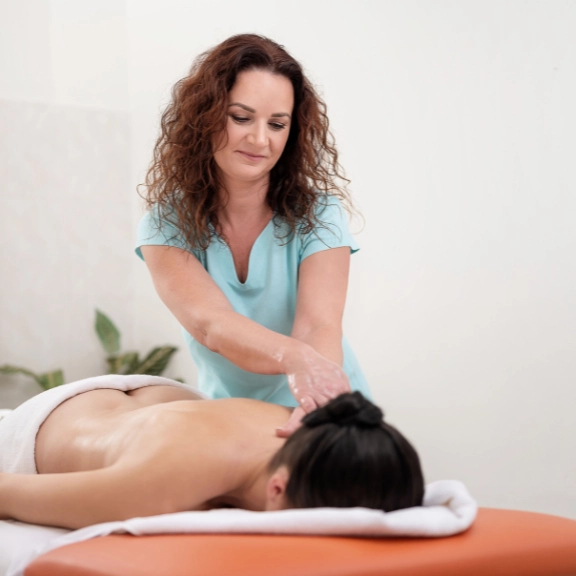
Reflex Zone Massage
Performed on a physician’s prescription
Particularly suitable for:
- Back and joint pain – relaxes the muscles and improves blood circulation
- Migraines and sleep disorders – helps relieve chronic headaches and supports better sleep
- Infertility – stimulates the function of internal organs through targeted pressure on reflex zones
TIP: Try the neck programme – it provides relief for tense neck muscles, especially for people with sedentary work.
- A specialised massage of reflex zones with positive effects on internal organs, blood circulation and muscle relaxation.
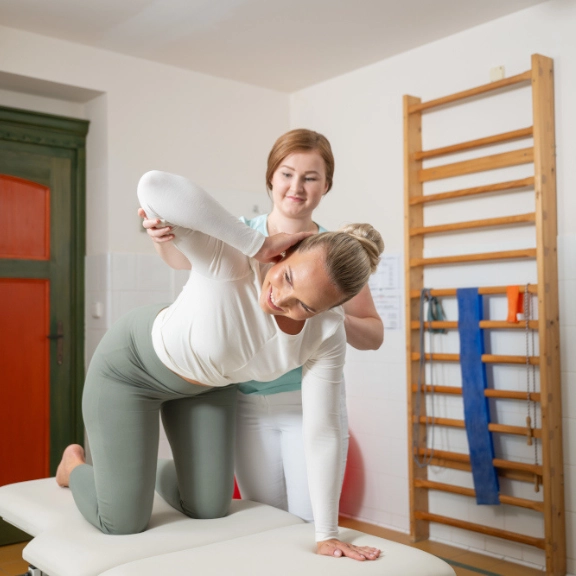
Individual Therapeutic Exercise
Performed on a physician’s prescription
Particularly suitable for:
- Back pain – targeted exercises for the lumbar, thoracic or cervical spine
- After injuries and surgery – supports rehabilitation and the restoration of mobility
- Joint problems – focuses on pain in the shoulder, knee, hip and ankle joints
TIP: The exercises you learn can also be practised at home – regular training improves therapy outcomes and helps ensure long-term relief.
-
Exercises performed under the guidance of a physiotherapist, individually tailored to the patient’s current health condition.
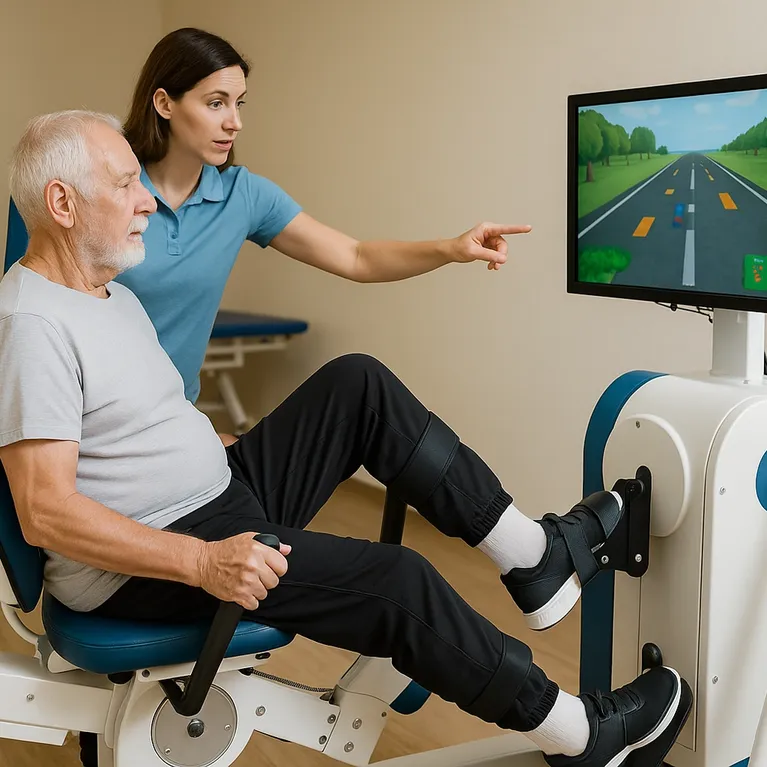
Equipment-Assisted Rehabilitation
Performed on a physician’s prescription
Particularly suitable for:
- Postoperative conditions – e.g. after implantation of hip or knee joint replacements
- Orthopaedic, rheumatological and neurological conditions – improves mobility, coordination and gait
- Reduced muscle strength and limited range of motion – supports the restoration of musculoskeletal function
TIP: Wear light, comfortable clothing and socks and bring something to drink. For hygiene reasons, training without footwear is not permitted.
-
Training on specialised rehabilitation equipment with visual feedback. The patient performs simple tasks on a screen that guide repetitive, precise movements and make progress visible over time.
Training parameters are individually adjusted by rehabilitation specialists according to the patient’s current health condition.