Slovácko
Slovácko and Surroundings
Slovácko is a region full of traditions, historical landmarks, living folklore, excellent wines and typical regional specialities.
Almost every village is surrounded by vineyards and characteristic wine cellars. Three important Moravian wine-growing areas belong to Slovácko: the Slovácko wine region, the Velké Pavlovice wine region and the Mikulov sub-region.
The whole region is crossed by numerous wine trails offering fascinating insights into viticulture. Slovácko is also known for its wine festivals, harvest celebrations, wine tastings (“košty”) and the traditional “Zarážání hory” – a festive custom marking the symbolic beginning of the grape harvest.
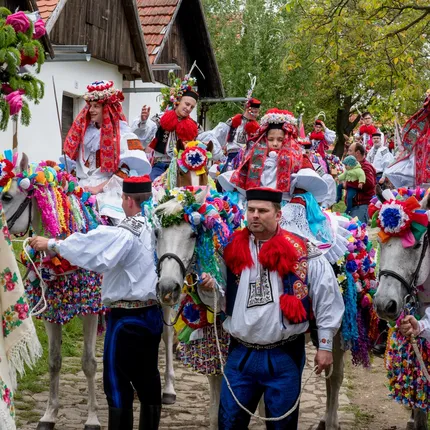
Vlčnov – The Ride of the Kings Tradition
The festivities in Vlčnov featuring the traditional Ride of the Kings (Jízda králů) are among the most visited folk festivals in the Czech Republic. This unique tradition has been inscribed on the UNESCO List of the Intangible Cultural Heritage of Humanity.
Young men ride through the village on brightly decorated horses, dressed in festive traditional costumes, reciting ancient verses in honour of their “king”. The celebration is accompanied by a colourful folklore programme offering insight into the customs and traditions of Moravian Slovácko.
UNESCO Heritage: Ride of the Kings and Verbuňk
The villages of Slovácko celebrate their festivals and church feasts with great devotion. People dress in their magnificent traditional costumes and celebrate with music, dance and regional food.
Among the highlights are the Moravian Slovak male dance “Verbuňk” and the Ride of the Kings – both recognised as UNESCO cultural heritage.
The central figure is a boy aged 10–12 (unmarried), seated on a white horse as the “king”, dressed in a traditional women’s folk skirt. He carries a white rose in his mouth – a symbol of innocence, dignity and silence.
He is accompanied by a festively dressed group of young men who ride through the entire village, singing verses and asking the villagers to present gifts to their king.
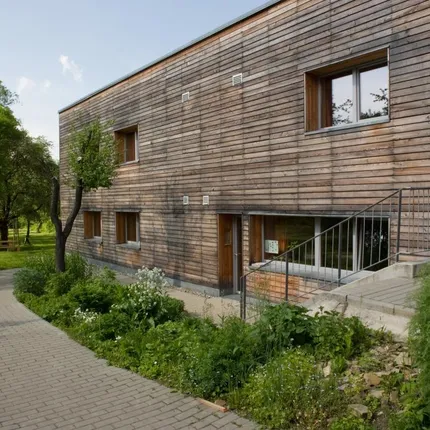
Hostětín – an Ecological Village at the Foot of the White Carpathians
The village of Hostětín is located in the Zlín Region at the foot of the White Carpathians, set in the valley of the Kolelač stream. It has become known for its respectful use of natural resources and the consistent application of ecological technologies.
As part of the guided “Green Hostětín” educational trail, visitors can explore projects such as a biomass heating plant, a reed-bed wastewater treatment plant and the Veronica low-energy house.
Apple Festival and Regional Traditions
Once a year, Hostětín celebrates its popular Apple Festival, closely linked to the local juice plant and the historic fruit drying facility – two important local institutions.
The festival includes a colourful market with regional products and crafts, tastings of apple juice and traditional apple cakes, and an exhibition of old fruit varieties. Visitors also gain insight into the ecological initiatives that have made Hostětín well known far beyond the region.

Uherské Hradiště – the Heart of Slovácko
Uherské Hradiště is regarded as the cultural centre of the Moravian Slovak region. This former royal town impresses with numerous landmarks and a rich historical heritage.
Particularly worth seeing are the Jesuit complex, the Church of St Francis Xavier, the Baroque “Golden Crown” pharmacy, the leaning tower of the Old Town Hall, the Marian column commemorating the plague, Baroque fountains and many other historic buildings.

Uherský Ostroh – Renaissance Château and Underground Experiences
Uherský Ostroh is a picturesque and peaceful small town in the south of the Zlín Region.
Its landmark is a medieval castle, rebuilt in the 16th century into a Renaissance château. The château offers three attractive visitor routes:
- the château gallery,
- the château tower with an exhibition of historic toys and prams (historic tour),
- and the château basement with an interactive fantasy exhibition – a unique experience especially for families with children.
Modrá – History and Nature Close to Velehrad
The village of Modrá lies just 2 km from the important pilgrimage site of Velehrad and is ideal to combine with a visit there. Modrá attracts visitors with two special attractions: the archaeological open-air museum Archeoskanzen and the natural history exhibition “Living Water” (Živá voda).
Archeoskanzen Modrá – History You Can Experience
The archaeological open-air museum in Modrá presents a reconstructed Slavic fortified settlement from the Great Moravian period. Visitors gain insight into everyday life of the time – from metal smelting and pottery making to farming activities and ongoing archaeological research.
The museum regularly offers educational demonstrations, workshops and seasonal programmes for all age groups.
“Living Water” – the Largest Freshwater Ecosystem in the Czech Republic
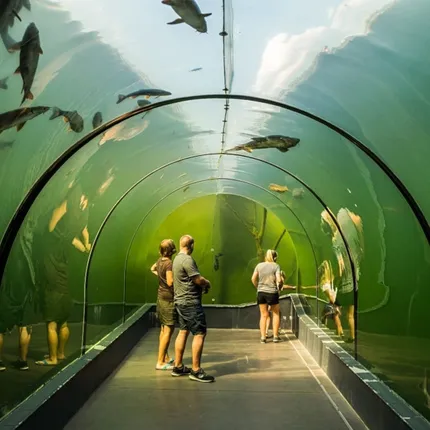
The interactive exhibition Živá voda is dedicated to the flora and fauna of the Morava River. Its highlight is a glass underwater tunnel in the open air – the longest of its kind in Europe – where visitors can observe various native freshwater fish in their natural habitat.
Large windows also offer fascinating views of life beneath the water surface, making the nature experience especially impressive.

Baťa Canal – Cycling and Boating along the Morava River
The Baťa Canal originally served to transport lignite from Hodonín to the power plant in Otrokovice. Part of the route follows the natural bed of the Morava River, while the rest was artificially constructed.
Today, the 52 km long waterway is a popular leisure and tourism attraction. Scenic cruises are offered along the canal, and many excursion boats are specially equipped for transporting bicycles.
The route is ideal for combining a boat trip and a cycling tour. An asphalt cycle path runs along the canal and connects seamlessly to other Moravian cycle routes and wine trails.

Velehrad – the Most Important Pilgrimage Site in Moravia
Velehrad with its Basilica of the Assumption of the Virgin Mary is regarded as the most important pilgrimage site in Moravia. The place is closely connected with the Slavic missionaries Saints Cyril and Methodius, the patrons of Europe.
In 1990, Pope John Paul II visited this spiritual site. The richly decorated interiors and the valuable 18th-century Baroque organ make the basilica an impressive destination for both pilgrims and culturally minded visitors.
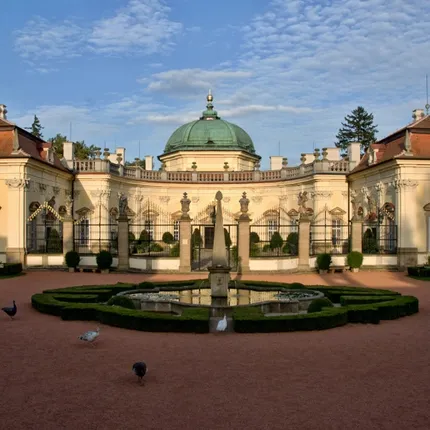
Buchlovice Château – a Baroque Jewel with Italian Flair
Buchlovice Château is one of the most important Baroque châteaux in Moravia. This magnificent residence was built at the beginning of the 18th century in the style of Italian country villas and was originally a gift from Count Johann Dietrich of Petřvald to his wife Agnes.
The château complex consists of the upper service courtyard and the lower château with representative interiors, historic furniture and art collections.
Particularly worth seeing is the extensive Baroque château park, later expanded in the English style. Today it is considered one of the most botanically valuable gardens in the Czech Republic.
Buchlovice Château is a popular destination for lovers of architecture, garden design and history – and a place with a special atmosphere.

Buchlov Castle – a Medieval Fortress and Landmark of Slovácko
Buchlov Castle is one of the oldest castles in the Czech Republic – it was built as early as the first half of the 13th century. Many of its original architectural features have been preserved to this day.
The fortress was never conquered and was gradually transformed by its owners into a Renaissance residence.
Buchlov Castle is considered the most distinctive landmark of Moravian Slovácko. Together with the nearby St Barbara’s Chapel, it forms a popular destination for cultural excursions and relaxation in the heart of nature.

Strážnice – Open-Air Museum of Folk Architecture
The Strážnice Open-Air Museum presents around 60 historic buildings in peaceful and scenic surroundings.
Visitors can discover the folk architecture of the 18th to 20th centuries, traditional building methods, craftsmanship, agriculture, livestock breeding, and the history of viticulture in the region – including old grape varieties and cultivation methods.
Throughout the year, the museum hosts a range of special programmes, festivals and demonstrations that bring the rural life of past centuries vividly to life.

Lednice Château – a Jewel of European Architecture
Lednice Château is considered one of the most beautiful châteaux in Europe. It houses extensive collections of weapons, hunting trophies and porcelain. Particularly worth seeing are the extensive English landscape park with its famous minaret and the carefully maintained French formal garden. The entire château complex forms part of the Lednice–Valtice Cultural Landscape, a UNESCO World Heritage Site.